
Hydroxyethyl Cellulose
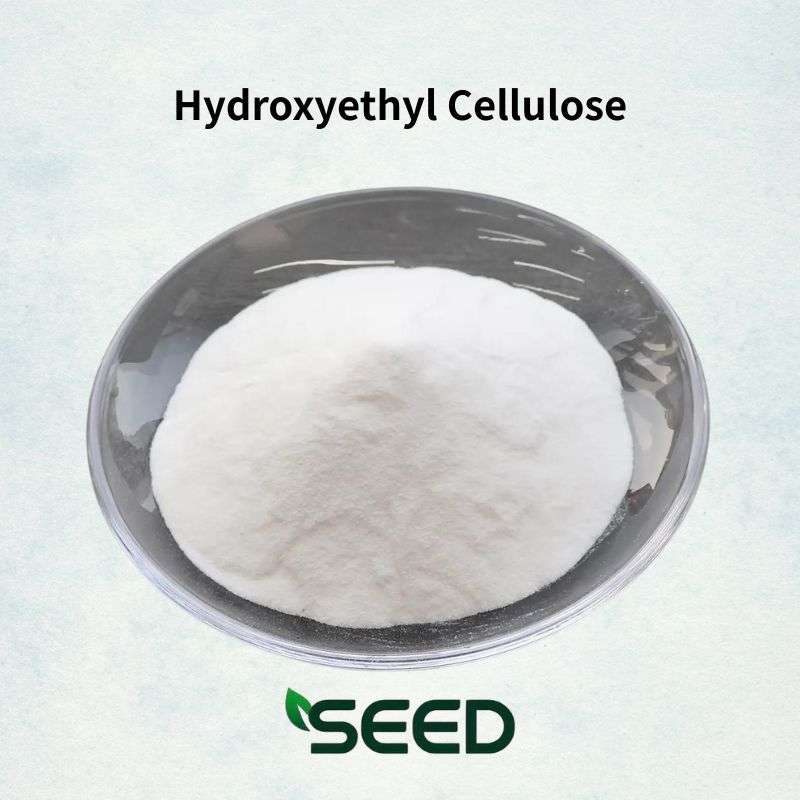
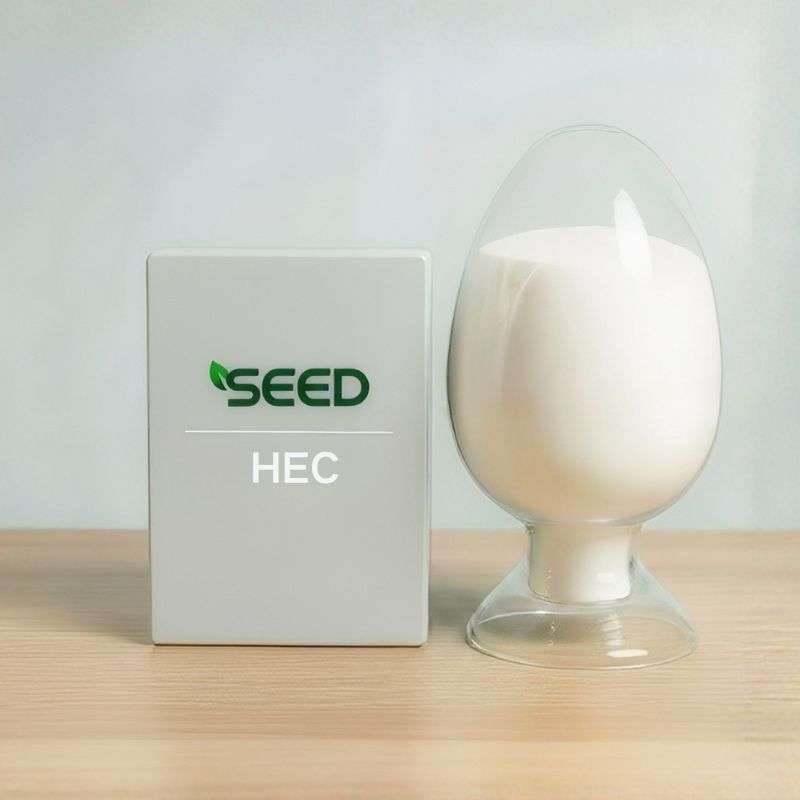
SEED HEC Product Details
HEC is a non-ionic cellulose ether providing excellent thickening, water retention, and stabilization across personal care, coatings, and construction applications. It offers superior performance in water-based paints and coatings, enhancing viscosity control and application properties. In daily chemical products like shampoos and body washes, HEC delivers pleasant texture and stability .
- Chemical Name: Hydroxyethyl Cellulose
- CAS Number: 9004-62-0
- Molecular Formula: [C6H7O2(OH)x(OC2H4OH)y]n
- Appearance: White to light yellow fibrous or powdered solid
- Particle Size: 98% passing through 100 mesh (standard grade)
- Bulk Density: 0.35-0.55 g/cm³
- pH Value: 6.0-8.5 (1% aqueous solution)
- Moisture Content: ≤5.0%
- Ash Content: ≤5.0%
SEED HEC Product Parameters
HEC Substitution Degree:
Molar substitution (MS): 1.5-3.0
Hydroxyethyl content: 40-72%
HEC Viscosity Grades Available:
Low viscosity: 5-1,500 mPa·s
Medium viscosity: 1,500-5,000 mPa·s
High viscosity: 5,000-10,000+ mPa·s
(Measured as 2% or 1% aqueous solution at 25°C depending on grade)
HEC Solubility:
Readily soluble in hot or cold water
Does not exhibit thermal gelation
Soluble in some polar organic solvents
Forms clear, viscous solutions
Other:
Storage Conditions: Store in sealed containers in cool, dry location. Protect from moisture. Shelf life: 24 months when properly stored.
Packaging: 25kg multi-wall paper bags with moisture barrier, or according to customer specification.
Quality Standards: Complies with relevant cellulose ether standards for industrial applications.

SEED HEC Product Advantages
No Thermal Gelation
SEED HEC’s most distinctive feature is the complete absence of thermal gelation. Viscosity remains consistent from 0°C to 90°C. Stable performance across all temperatures, no viscosity spike during heating, ideal for formulations requiring heat processing, consistent spray patterns in hot conditions, reliable performance in tropical climates, and hot applications.
Superior Salt Tolerance
HEC maintains viscosity and functionality in high-electrolyte environments. Excellent performance in high-salt formulations, resistant to viscosity loss from mono- and divalent cations, ideal for seawater-based or high-mineral content systems, superior to HPMC in saline environments.
Wide pH Stability
HEC remains stable across pH 2-12, broader than most cellulose ethers, suitable for acidic formulations (pH 2-4), excellent in neutral systems (pH 6-8), stable in alkaline conditions (pH 10-12), no degradation or viscosity loss at pH extremes.
Non-Ionic Character
Excellent compatibility with anionic, cationic, and nonionic ingredients, no interaction with charged surfactants or polymers, stability in complex formulations, and predictable behavior in multi-component systems.
Pseudoplastic Rheology
HEC provides excellent shear-thinning behavior, easy pumping and application, good leveling after application, reduced spattering, smooth, professional finish.
Superior Surface Activity
HEC reduces surface tension, providing improved wetting of substrates, enhanced pigment dispersion, better foam stabilization, and improved emulsion stability.
SEED HEC Product Application







SEED HEC Frequently Asked Questions
How does HEC function in water-based and oil-based coatings?
HEC serves as an effective thickener and rheology modifier in coating formulations, providing excellent viscosity control across different paint types. In water-based coatings, it dissolves quickly to create smooth, consistent viscosity that improves application properties through brushing, rolling, or spraying. The polymer provides pseudoplastic flow behavior where the coating thins under application stress but maintains body on vertical surfaces to prevent sagging and runs. HEC stabilizes pigment dispersions preventing settling during storage, enhances leveling for smooth finishes without brush marks, and improves spatter resistance during roller application.
What benefits does HEC provide in laundry detergents and hand soaps?
HEC provides important thickening and stabilization functions in liquid laundry detergents and hand soap formulations. In laundry detergents, it builds appropriate viscosity for controlled pouring and accurate dosing while maintaining excellent flowability for dispensing systems. The polymer stabilizes formulations containing enzymes, optical brighteners, and suspended particles, preventing ingredient separation during shelf life. HEC shows excellent compatibility with anionic, nonionic, and amphoteric surfactants commonly used in cleaning products. For hand soaps, it creates rich, luxurious texture that enhances the washing experience and consumer perception of quality.
How is HEC used in shampoo and shower gel applications?
HEC is widely used in shampoo and shower gel formulations as a thickener and texture enhancer that improves both performance and sensory properties. In shampoos, it builds optimal viscosity creating premium feel and appearance while improving product stability and ease of dispensing from bottles. The polymer enhances foam volume and stability, creating rich, creamy lather that consumers associate with effective cleansing and quality. HEC provides excellent salt tolerance, which is important since sodium chloride is commonly used for viscosity adjustment in personal care products. In shower gels and body washes, it creates luxurious texture and body that clings to skin during application.
What role does HEC play in toothpaste formulations?
HEC serves as an important binder and thickener in toothpaste formulations, providing the characteristic texture and consistency consumers expect while ensuring product stability and performance. The polymer creates appropriate viscosity so toothpaste dispenses smoothly from tubes, maintains its shape on the toothbrush without running off, and provides pleasant texture during brushing. HEC helps bind and suspend abrasive particles like silica or calcium carbonate evenly throughout the formulation, preventing separation or settling during storage and ensuring consistent cleaning performance. It stabilizes fluoride and other active ingredients, maintains moisture balance preventing the toothpaste from drying out or becoming too fluid, and provides compatibility with flavoring agents, sweeteners, and foaming surfactants.
How does HEC enhance skincare product formulations?
HEC is valued in skincare formulations for its excellent thickening properties, skin compatibility, and ability to create desirable textures in creams, lotions, gels, and serums. The polymer provides versatile viscosity control allowing formulators to create products ranging from light, easily absorbed serums to rich, luxurious creams. HEC forms clear, smooth gels that are aesthetically appealing and provide excellent skin feel without tackiness or residue. It acts as a stabilizer in emulsions, helping prevent phase separation and maintaining product consistency throughout shelf life. The polymer enhances spreadability, making products easier to apply and massage into skin. HEC is compatible with a wide range of skincare active ingredients including vitamins, botanical extracts, and humectants.
What functions does HEC serve in animal feed applications?
HEC serves as a binder and pelletizing aid in animal feed manufacturing, improving pellet quality, durability, and nutritional delivery. The polymer helps bind feed ingredients together during the pelletizing process, creating firm, cohesive pellets that resist breakage during handling, transportation, and storage. This reduces fines and dust, minimizing waste and improving feed efficiency. HEC improves pellet water stability, which is particularly important for aquaculture feeds that must maintain integrity when immersed in water, allowing fish and shrimp adequate time to consume the feed before it disintegrates. The polymer enhances the distribution of vitamins, minerals, medications, and other additives throughout the feed, ensuring animals receive consistent nutrition.
How is HEC used in oil drilling operations?
HEC plays critical roles in oil drilling fluids and completion fluids, providing viscosity control, fluid loss prevention, and wellbore stability essential for safe, efficient drilling operations. In drilling muds, HEC thickens the fluid to suspend drill cuttings and transport them to the surface, preventing settling in the wellbore that could cause stuck pipe or circulation loss. The polymer provides shear-thinning behavior where the fluid flows easily through drill pipe and pumps but maintains viscosity in the annulus for effective cuttings removal. HEC reduces fluid loss into permeable formations by forming a thin filter cake on the wellbore wall, protecting formation integrity and preventing formation damage. It provides wellbore stability, works effectively in freshwater and saltwater systems, tolerates high temperatures encountered in deep wells, is environmentally acceptable for offshore operations, and can be easily degraded with enzymes when needed for well completion or workover operations.
Products you may be interested in


Connect with Us Today
Reach out to discover how our cellulose ether products can elevate your business and meet all your chemical solution needs.