
Redispersible Polymer Powder
SEED RDP Product Details
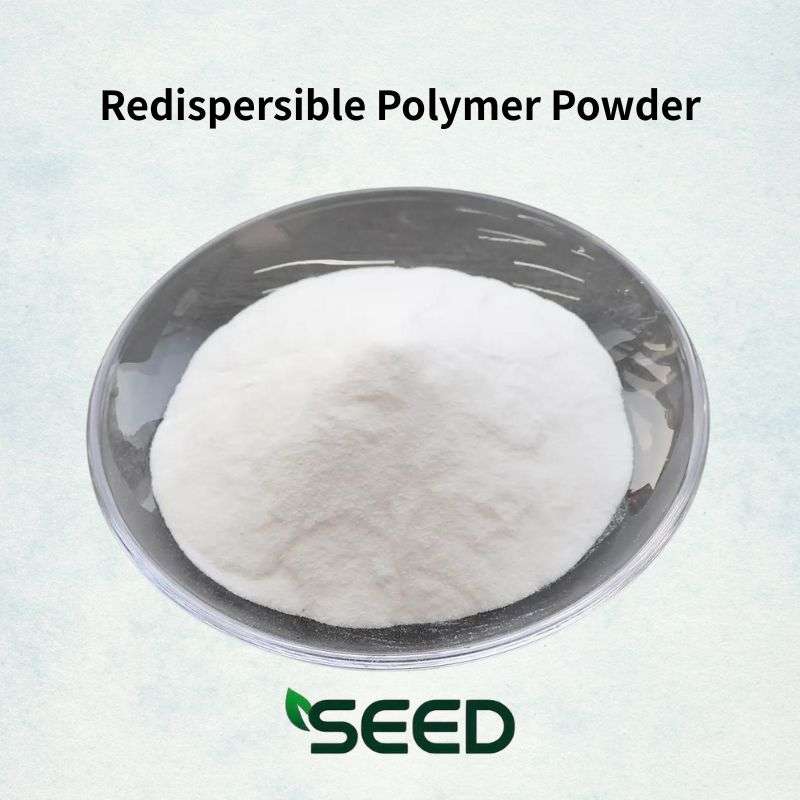
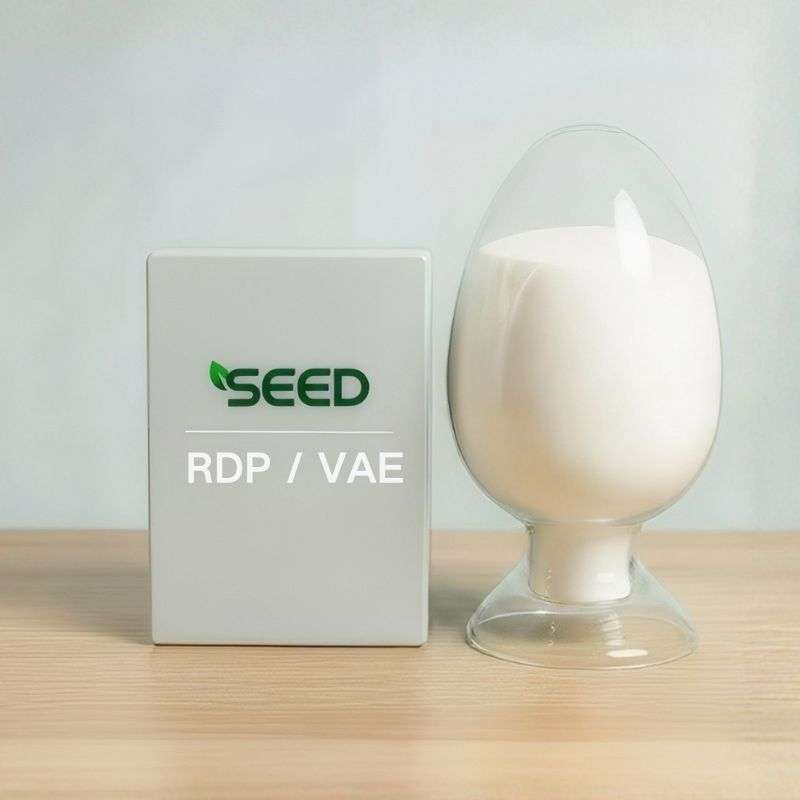
Redispersible polymer powder is a water-soluble powdered material based on polymer emulsion and produced through spray drying. Its primary component is polymer resin emulsion (accounting for 80%–95%), combined with auxiliary additives such as protective colloids (e.g., polyvinyl alcohol) and anti-caking agents. Upon contact with water, it can redisperse to form a stable emulsion, offering both the handling convenience of a powder and the adhesive, film-forming properties of an emulsion.
- Chemical Name: Redispersible Polymer Powder (Vinyl Acetate-Ethylene Copolymer based)
- Alternative Names: VAE Powder, Polymer Powder, Dispersible Powder
- Appearance: White free-flowing powder
- Particle Size: ≥80% passing through 100 mesh
- Bulk Density: 400-600 g/L
- Solid Content: ≥98%
- Ash Content: 10-15% (protective colloid and additives)
- pH Value: 5.0-8.0 (10% dispersion)
- Moisture Content: ≤1.5%
SEED RDP Product Parameters
RDP Polymer Composition:
Base polymer: Vinyl Acetate-Ethylene (VAE) copolymer
Protective colloid: Polyvinyl alcohol (PVA)
Anti-caking agent: Mineral powder
Other additives: Defoamers, dispersants
RDP Available Grades:
Flexible grade: High elongation, low Tg
Standard grade: Balanced properties
Hard grade: High hardness, higher Tg
Hydrophobic grade: Enhanced water resistance
High flexibility grade: Superior elongation for flexible applications
Other:
Minimum Film-Forming Temperature (MFT): 0-5°C (flexible grades) to 15-25°C (hard grades)
Glass Transition Temperature (Tg): Varies by grade: -15°C to +20°C

SEED RDP Product Advantages
Superior Adhesion Enhancement
RDP dramatically improves adhesion strength of cementitious mortars, Increases bond strength by 50-150%, and enhances adhesion to difficult substrates (glass, metal, old concrete, tiles). Improves wet adhesion strength by 80-200%. Provides permanent adhesion that resists aging.
Flexibility and Crack Resistance
The polymer film network created by RDP provides significantly improved flexural strength (40-100% increase), excellent crack-bridging capability, Resistance to substrate movement and thermal cycling, reduced brittleness of hardened mortars, and Enhanced impact resistance.
Water Resistance
RDP creates a hydrophobic polymer network that reduces water absorption by 30-70%, improves resistance to water penetration, enhances freeze-thaw durability, prevents premature deterioration in wet environments, and maintains bond strength under wet conditions.
Quality Consistency
Spray-drying technology ensures consistent particle size, composition, and performance batch-to-batch. Low VOC emissions, no hazardous solvents
Abrasion Resistance
Hardened mortars show 50-100% improvement in abrasion, resistance, extending service life of floors and heavy-use areas.
Extended Open Time
Polymer film formation delays surface skinning, extending open time by 15-40 minutes depending on conditions and dosage.
Redispersion Quality
Fully redisperses in water to form stable emulsion with particle size and properties nearly identical to original latex, ensuring consistent performance.
Cost-Effective Enhancement
While more expensive than cellulose ethers, RDP provides performance improvements impossible to achieve with other admixtures, justifying its cost in high-performance applications.
Improved Workability
Fresh mortar properties are enhanced. Better flow and spreadability. Reduced stickiness to tools. Improved open time, enhanced sag resistance, and Smoother finishing characteristics.
Products you may be interested in

SEED RDP Frequently Asked Questions
What are the core advantages of redispersible polymer powder?
Its key advantages are prominent: excellent film-forming capability, creating continuous and dense polymer films upon drying, significantly enhancing the bonding strength, flexibility, and water resistance of materials; outstanding compatibility, seamlessly integrating with construction substrates like cement, gypsum, and sand without compromising system stability; ease of use in construction—simple to store and transport (with no risk of liquid leakage), rapidly dispersible, and suitable for direct incorporation into dry-mix formulations; broad applicability, serving as a crucial functional additive in dry-mix mortars.
How does RDP improve tile adhesive bond strength?
RDP significantly enhances bond strength in tile adhesives by forming a flexible polymer film that creates strong adhesion between tiles and various substrates including concrete, cement screeds, existing tiles, and non-porous surfaces. When mixed with water, the powder particles redisperse to form an emulsion that integrates with the cement matrix. As the adhesive cures, the polymer creates a continuous film that bridges between the tile and substrate, dramatically improving both initial grab and long-term bond strength. This is especially important for heavy tiles, large format tiles, and installations on challenging substrates where traditional cement-based adhesives alone would provide insufficient adhesion.
What role does RDP play in improving tile adhesive flexibility?
RDP provides essential flexibility to tile adhesives, allowing them to accommodate substrate movements, thermal expansion, and minor structural shifts without bond failure or cracking. The polymer film formed during curing remains flexible even after complete drying, acting as a stress-absorbing layer between rigid tiles and substrates. This flexibility is critical for exterior installations exposed to temperature fluctuations, underfloor heating systems where thermal cycling occurs, installations over wooden substrates that expand and contract with moisture changes, and areas subject to vibration or minor structural movement. Without RDP, rigid cement-based adhesives would crack under these stresses, leading to tile debonding and installation failure.
How does RDP enhance tile adhesive water resistance?
RDP dramatically improves water resistance in tile adhesives by forming a hydrophobic polymer film within the cured adhesive matrix that reduces water absorption and permeability. This polymer network fills pores and capillaries in the cement structure, preventing water penetration that could weaken the bond or cause efflorescence. The enhanced water resistance is essential for wet areas like bathrooms, showers, swimming pools, kitchens, and exterior facades exposed to rain. RDP-modified adhesives maintain bond strength even when continuously exposed to moisture, prevent water migration to substrates that could cause damage, and resist freeze-thaw cycling in exterior applications where trapped water could cause spalling and failure.
Why is RDP important for preventing tile adhesive sagging on vertical surfaces?
RDP is crucial for controlling sag resistance in tile adhesives applied on walls and vertical surfaces, preventing tiles from sliding downward before the adhesive sets. The redispersed polymer increases the adhesive’s cohesive strength and internal structure, allowing it to support tile weight without slumping or deforming. This thixotropic behavior means the adhesive maintains high viscosity under the static load of tiles while remaining workable during application and combing. RDP enables reliable installation of heavy tiles, large format tiles, and full wall tiling without needing excessive mechanical support or waiting between courses. The improved sag resistance also allows thicker adhesive application when needed for leveling irregular surfaces.
How does RDP improve tile adhesive workability and open time?
RDP significantly enhances tile adhesive workability by improving the material’s consistency, spreadability, and ease of combing into even ridges that don’t collapse or dry out too quickly. The polymer acts as a lubricant during mixing and application, reducing stickiness to tools while maintaining necessary cohesion. It extends open time, which is the period during which tiles can be positioned and adjusted while still achieving proper adhesion. This extended working window is valuable for large installations, complex patterns, or when working in hot, dry conditions where standard adhesives would skin over rapidly. The improved workability reduces installer fatigue, allows more precise tile placement, and ensures consistent ridge structure for optimal adhesive transfer and contact.
Connect with Us Today
Reach out to discover how our cellulose ether products can elevate your business and meet all your chemical solution needs.