In the competitive world of industrial baking, achieving the perfect crumb structure, volume, and shelf life is both an art and a science. We understand that the difference between a dense, crumbly loaf and a soft, airy bun often lies in the hydrocolloids used. As a premier distributor of high-quality HPMC, we have witnessed firsthand how this ingredient transforms baking processes. Whether you are aiming to replicate the iconic texture of a McDonald’s-style hamburger bun or striving to create the perfect gluten-free loaf, SEED HPMC is the secret weapon your bakery needs.
Is Hydroxypropyl Methylcellulose (HPMC) Safe to Eat?
Before diving into technical applications, it is crucial to address the most common question consumers and manufacturers have: Is it safe?
The short answer is a resounding yes. Food-grade HPMC (often labeled as E464 in Europe) is a modified cellulose derived from natural plant fibers. It is widely recognized as safe (GRAS) by the U.S. Food and Drug Administration (FDA) and approved by the European Food Safety Authority (EFSA).
Unlike synthetic chemicals that might raise health concerns, HPMC passes through the digestive system without being absorbed, acting much like dietary fiber. It is non-toxic, non-allergenic, and suitable for vegan and vegetarian diets. For manufacturers, this means you can improve your product’s quality without compromising your “clean label” goals or alienating health-conscious consumers.
What is HPMC in Gluten-Free Baking?
If you have ever tried to bake bread without wheat flour, you know the struggle. Gluten is the magical protein network that traps gas bubbles released by yeast, allowing dough to rise and hold its shape. Without gluten, traditional dough becomes a batter that fails to rise, resulting in a dense, brick-like product.
In gluten-free baking, HPMC acts as a gluten mimic.
When hydrated, HPMC forms a gel-like structure that replicates the viscoelastic properties of gluten. It provides the structural scaffolding necessary to trap carbon dioxide during fermentation. Essentially, it tricks the dough into behaving as if it contains wheat.
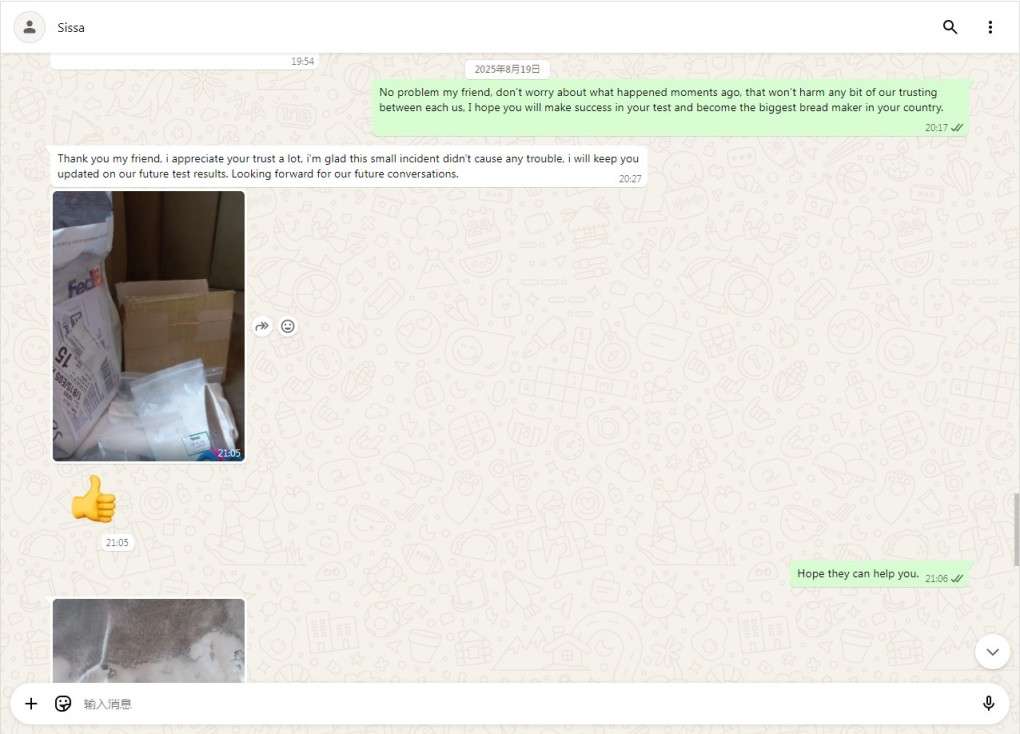
This is not just theoretical. We recently collaborated with a bread manufacturer in Morocco who was struggling with the texture of their gluten-free products. After testing samples of our SEED HPMC-SF400M, the results were immediate. The client noted that the “batter” transformed into a workable “dough,” allowing for better handling and shaping—a hurdle that many gluten-free bakers fail to clear.


Applications of HPMC in Bread: The SEED Advantage
The versatility of HPMC extends beyond just gluten-free applications. It is a vital additive for improving standard wheat breads, buns, and pastries. Based on feedback from our global client base and our technical team’s research, here is how adding the proper HPMC can effectively improve bread quality.
Replace Gluten to Form a Gas-Retaining Network
As mentioned, HPMC creates a film around gas cells. In our recent project with the Moroccan manufacturer, they wanted to create a hamburger bun with the specific “bounce” and resilience found in famous fast-food chains like McDonald’s. By using SEED HPMC-SF400M, the dough was able to retain gas more efficiently during the proofing stage. The result was a bun with a uniform crumb structure that didn’t collapse after baking.
Improve Dough Extensibility and Toughness
Machinability is a massive pain point in industrial baking. Sticky dough clogs machines, while brittle dough tears during molding. HPMC modifies the rheology of the dough, providing better extensibility. This means the dough can stretch without breaking as it rises. Our technical support team guided the client through recipe adjustments, ensuring that the HPMC was hydrated correctly to maximize this toughness. The client reported significantly less waste on the production line because the dough was simply easier to work with.
Increase Bread Volume & Enhance Soft Texture
Volume equals profit. A loaf that rises higher looks more appealing and provides a better mouthfeel. Because HPMC strengthens the walls of the air pockets within the bread, the loaf can expand further without bursting. This leads to a significant increase in specific volume. Furthermore, HPMC is a hydrocolloid, meaning it loves water. It retains moisture within the crumb, ensuring the bread remains soft and springy rather than dry and crumbly.
Delay Staling and Extend Shelf Life
For distributors and retailers, shelf life is king. Staling occurs when starch molecules in the bread retrogradate (recrystallize) and moisture migrates from the crumb to the crust. HPMC binds water tightly, preventing this migration. This keeps the crumb soft for days longer than standard recipes. Our Moroccan client was particularly satisfied with this aspect, as it allowed them to distribute their hamburger buns to a wider geographic area without fear of the product going stale before reaching the consumer.


Why choose SEED’s food-grade HPMC??
The success of the Moroccan hamburger bun project wasn’t just about the product; it was about the partnership. At SEED, we don’t just ship bags of powder; we provide solutions.
When the client approached us, they didn’t just need HPMC; they needed a recipe that worked. Our technical team engaged in several rounds of exchanges, tweaking hydration levels and mixing times until the client achieved that “McDonald’s-style” perfection.