Wood coatings, automotive refinish paints, metallic inks and plastic topcoats have long relied on nitrocellulose (NC) as the core film-forming additive. Thanks to its fast drying speed, easy sanding performance and excellent grain transparency, NC has dominated the coating market for decades. However, against the backdrop of stricter global control over hazardous chemicals, upgraded environmental policies and rising end-user requirements for weather resistance and color retention, nitrocellulose suffers from inherent drawbacks such as high flammability, severe yellowing tendency and cumbersome import & export customs procedures.
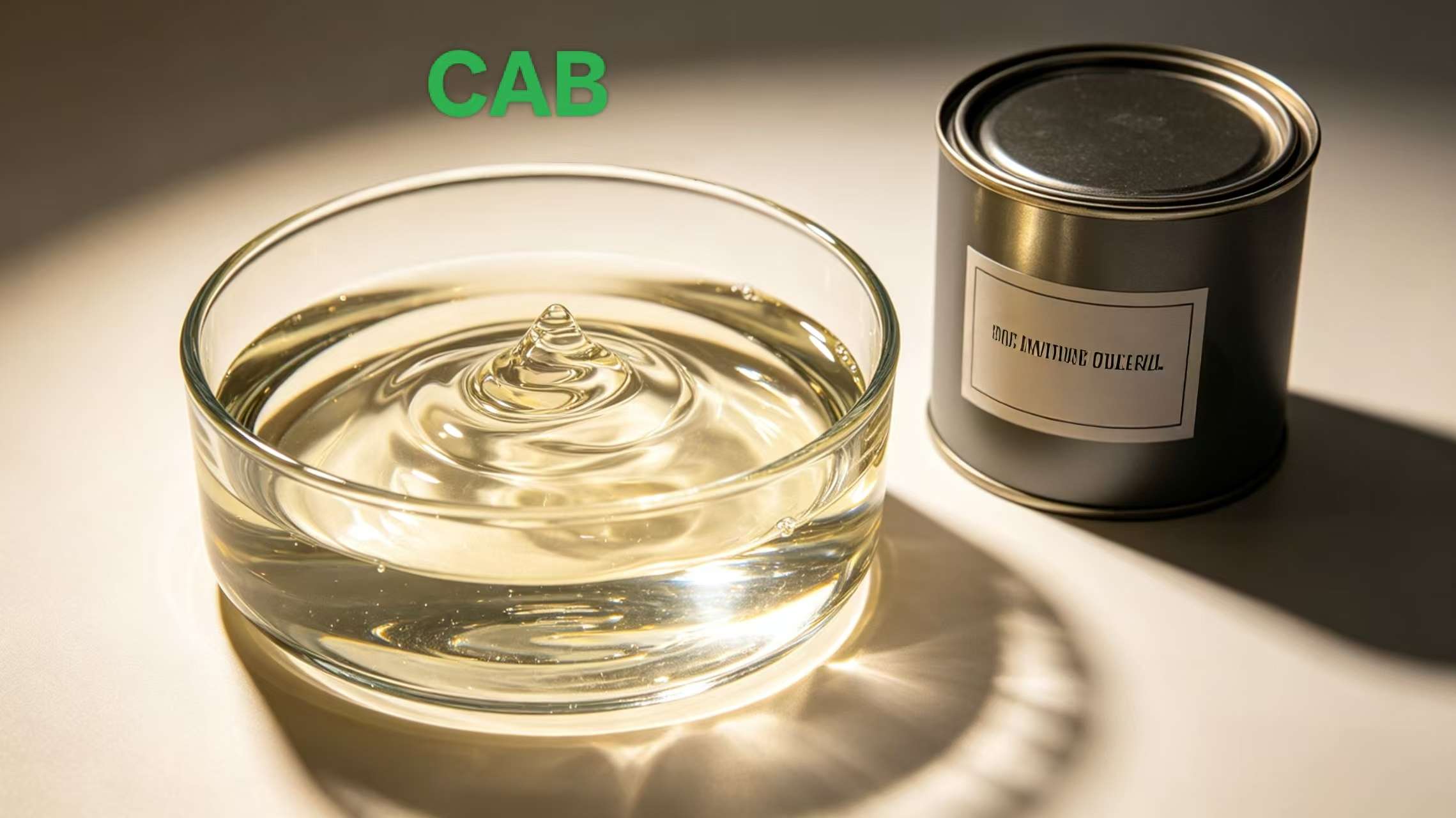
As a modified cellulose ester, cellulose acetate butyrate (short for CAB cellulose) perfectly reproduces the excellent workability of nitrocellulose lacquers while making up for all the deficiencies of NC. Currently, it has become the mainstream eco-friendly raw material adopted by coating manufacturers worldwide to replace nitrocellulose cotton.
1.Greatly Improved Safety Performance, Eliminating Regulatory Headaches for Hazardous Chemicals
Nitrocellulose (NC) is a Class 1 highly flammable hazardous chemical with an extremely low flash point. It carries risks of spontaneous combustion and explosion under high temperature, impact or static electricity.
- 1. Production side: Factories are required to build dedicated explosion-proof workshops and independent hazardous chemical warehouses, incurring exorbitant costs for fire-fighting equipment and safety audits.
- 2. Logistics side: Domestic transportation demands hazardous chemical vehicles. Ocean export requires full preparation of dangerous goods packaging certificates and UN number declarations. Markets including Nigeria, Belarus and Iran implement strict customs inspections, which frequently lead to cargo detention and delivery delays.
- 3. Storage side: It cannot be stacked under high temperatures, has a short shelf life, and poses hidden risks of decomposition and spontaneous combustion during long-term storage
- 4.Cellulose Acetate Butyrate (CAB) is a common non-hazardous chemical powder with no flammable or explosive properties.it can be stored in ordinary warehouses and transported by standard trucks, with no hazardous chemical certificates required for exports. Customs clearance procedures are simplified, drastically cutting corporate costs for warehousing, logistics and safety compliance, and enabling stable delivery of bulk foreign trade orders.
2.Excellent Weatherability & Yellowing Resistance, Ideal for Outdoor Light-Colored Coatings
- NC nitrocellulose features poor molecular structural stability and is universally recognized as a yellow-prone raw material in the industry.
- When NC systems are adopted for light-colored indoor furniture, outdoor metal components and white automotive refinish paints, yellowing, gloss loss and dullness of paint films will emerge within 3–6 months. After 500 hours of xenon lamp accelerated aging test, color difference is clearly visible to the naked eye, limiting its use only to dark antique indoor woodwork.
- Modified via dual esterification with acetic acid and butyric acid, CAB molecules deliver exceptional UV resistance:
- The paint film barely discolors under long-term sunlight exposure, high temperature and high humidity, maintaining long-lasting transparency and gloss. Minimal color shift is observed after 1000 hours of xenon lamp aging. It is widely applied to high-end light solid wood furniture, exterior container coatings, white automotive topcoats and musical instrument clear coats, completely solving the yellowing aging pain point of nitrocellulose lacquers and extending coating service life.
3.Higher Clarity & Superior Texture of Paint Films, Fewer Application Defects
Although nitrocellulose lacquer offers decent transparency, spraying easily generates orange peel, pinholes, sagging, floating and flooding defects. It demands highly skilled spray operators, resulting in low yield for mass assembly line production.
CAB features balanced solvent release rates, allowing flexible adjustment of drying speed:
- 1. Forms highly transparent films that fully restore wood grain and metallic luster of aluminum pigments, delivering crystal-clear mirror clear coats with delicate, smooth hand feel.
- 2. Outstanding flow & leveling capacity minimizes spray orange peel and brush marks, with no sagging during standby, ensuring stable mass production on high-speed production lines.
- 3. Powerful wetting and dispersion capacity for pearlescent powder and aluminum silver paste delivers uniform color development for metallic coatings without delamination or mottling.
4.Enhanced Chemical Resistance, Wear & Corrosion Resistant Paint Films
- NC nitrocellulose films lack flexibility and show weak resistance to water, alcohol and oil stains. Frequent wiping with alcohol or exposure to daily cleaners will cause whitening, erosion and peeling, shortening the service life of furniture and hardware products.
CAB forms dense films balancing hardness and flexibility:
It resists alcohol, weak acids, weak alkalis and edible oil contamination, with scratch-resistant and crack-free coatings. Meanwhile, it locks plasticizers inside the formula to eliminate plasticizer migration that causes sticky, softened films, delivering stable long-term performance for cabinet, outdoor metal and leather coatings.
5.Low VOC & Eco-Friendly, Compliant with Global Environmental Regulations
- Traditional NC nitrocellulose coatings rely on large volumes of strong solvents for dilution, generating high VOC emissions during application and requiring heavy investment in waste gas treatment equipment. Multiple countries in Europe, America and Southeast Asia impose import restrictions on high-nitrocellulose coatings.
- CAB cellulose formulas adapt to low-VOC eco-friendly systems:
- Formulable with eco ester and bio-based solvents, it releases fewer pollutants with no pungent odor, meeting environmental standards for food-contact coatings and domestic wood lacquers. No toxic byproducts are generated during production, helping factories pass environmental audits and avoid environmental penalties.
6.Broader Compatibility, Universal for All Coating Categories
- NC is only compatible with nitrocellulose coating systems, showing poor compatibility with polyurethane, thermoplastic solid acrylic and alkyd resins, leaving minimal room for formula modification.
- CAB is available in a complete range of grades (low-viscosity 381-0.1, medium-viscosity 381-2, high-viscosity 551 series) with outstanding universal compatibility:
- It can be blended with solid acrylic powder, PU resin and alkyd resin to produce wood clear coats, sealing primers, printing inks, plastic coatings and leather varnishes. Suitable for single-component air-dry curing at ambient temperature as well as low-temperature baking production lines, one single raw material covers multiple product lines and reduces manufacturers’ raw material inventory varieties.
Conclusion
Compared with nitrocellulose (NC), cellulose acetate butyrate (CAB) delivers superior performance across six key dimensions: safe production, cross-border customs clearance, yellowing and weather resistance, film appearance, chemical protection, and formula compatibility.
CAB retains the core merits of nitrocellulose lacquers — fast drying, easy sanding and outstanding wood grain clarity. Meanwhile, it resolves widespread industry pain points including flammability risks and strict regulatory controls, aging-induced yellow discoloration, excessive VOC emissions, and various coating application defects.
As the coating industry shifts toward safer, eco-friendly and high-end products, replacing nitrocellulose cotton with CAB cellulose stands as the optimal formula solution for manufacturers of wood lacquers, automotive refinish coatings, industrial metal paints and printing inks to cut costs, boost efficiency and expand market reach.