Cellulose Acetate Butyrate (CAB) Combined with Solid Acrylic Resin Powder: Formulation Solution for High-Performance Road Marking Paint
With continuous expansion of global transportation infrastructure, solvent-based road marking paints for highways, factory zones, parking lots and campus roads are facing higher performance requirements. The markings need to dry rapidly, resist UV radiation and discoloration under long-term outdoor exposure, withstand vehicle abrasion, rainwater and pavement oil contamination. They should resist sagging during spray application and prevent sedimentation and stratification of white/yellow pigments.
Traditional road marking coatings merely adopt solid acrylic resin as the primary film-forming binder, which leads to persistent industrial challenges: titanium dioxide and reflective glass beads tend to settle when the paint stands still; orange peel defects easily occur after spraying; the coating rapidly loses gloss and develops microcracks under prolonged outdoor sunlight exposure. In addition, lifting and bleeding often happen during recoating of old and new markings, greatly shortening the service life of road markings.
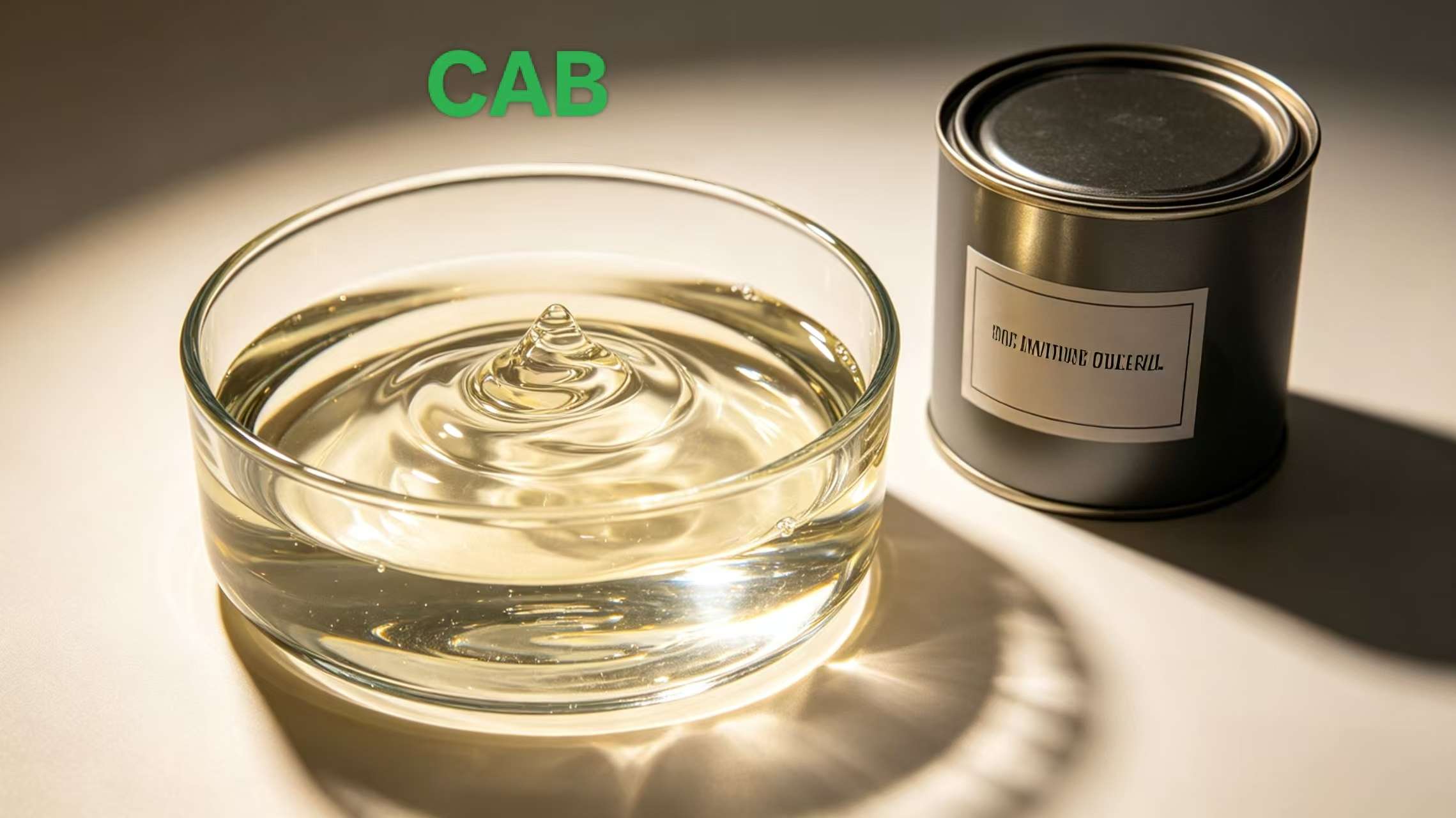
Blending Cellulose Acetate Butyrate (CAB) with thermoplastic solid acrylic resin powder represents a mature and mainstream formulation system for premium solvent-based road marking paints. The two materials complement each other synergistically and comprehensively optimize the performance of road marking coatings in terms of workability, outdoor weather resistance and long-term storage stability.
I.CAB and solid acrylic resin Functions of Core Raw Materials in Road Marking Paint
1.Thermoplastic Solid Acrylic Resin Powder (Primary Film-Forming Resin)
As the fundamental film-forming substance of road marking paint, solid acrylic resin powder provides core adhesion, abrasion resistance and basic weatherability. It dissolves in mixed solvents including esters, ketones and aromatic hydrocarbons, and forms a continuous film via solvent evaporation under ambient temperature, suitable for on-site spray construction of road markings.
Advantages: Excellent adhesion to asphalt and concrete substrates; high transparency, ideal for formulating highly visible white and yellow markings; resistance to mild acid and alkali, and stable raw material supply.
Nevertheless, acrylic resin used alone has obvious drawbacks: insufficient rheological properties resulting in easy sedimentation of fillers; slow solvent release leads to prolonged touch-dry time; the film is prone to gloss loss and embrittlement under long-term outdoor exposure.
2.Cellulose Acetate Butyrate (CAB) (Performance-Modified Resin / Auxiliary Film-Former
CAB is an ester modified from natural cellulose and features outstanding compatibility with thermoplastic acrylic resin. It fulfills five key functions in road marking paint formulations:
- 1. Accelerate drying and improve construction efficiency
- 2. Optimize rheology to prevent sedimentation and sagging
- 3. Improve film appearance and eliminate application defects
- 4. Boost outdoor weather resistance, anti-yellowing and anti-cracking performance
- 5. Prevent inter-coat lifting and color bleeding
II. Recommended CAB Grades for Road Marking Paint
- CAB-381-0.5 (First Choice)
Medium-low universal viscosity, balanced drying speed, leveling property and flexibility, widely applicable to most road marking formulations. - CAB-381-0.1 (High-Solids Formulations)
Ultra-low viscosity, suitable for high-solids marking coatings, lowering construction viscosity and improving spray atomization effect. - CAB-381-2 (Heavy-Duty Outdoor Markings)
Higher viscosity and enhanced flexibility, the preferred grade for outdoor roads in northern regions with large temperature fluctuations.
III.Comprehensive Advantages of This Formulation System
1. Construction Performance
Fast drying, smooth spraying, neat marking lines. Fillers are less likely to settle, improving storage stability inside tanks and lowering frequency of stirring.
2. Outdoor Durability
Excellent UV resistance, anti-yellowing, water resistance and resistance to pavement engine oil contamination. It extends marking service life and reduces repeated road renovation costs.
3. Safety & Foreign Trade Advantages
Compared with nitrocellulose (NC) systems, CAB is not classified as Class 1 flammable hazardous chemicals. Factories do not need explosion-proof workshops for production. Complicated dangerous goods documentation is unnecessary for sea export, significantly cutting logistics and customs clearance costs.
4. Broad Compatibility
Compatible with various acrylic resins, pigments, reflective microspheres and conventional coating additives. Existing production lines require no large-scale renovation and can directly replace traditional formulations.